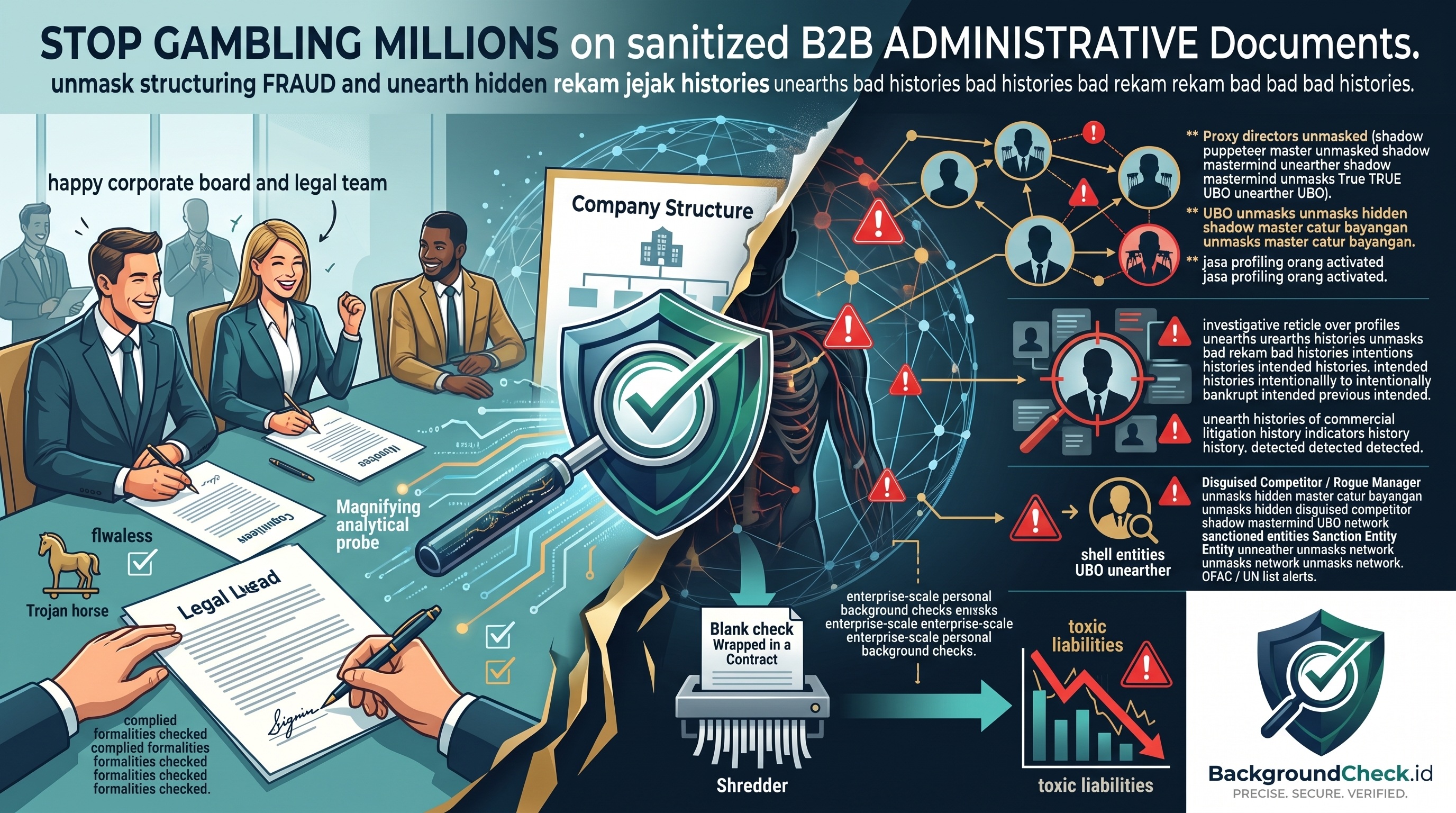
On paper, your prospective business partner or vendor looks flawless. Their Deed of Incorporation is notarized by a prominent official, their business licenses are active, and their tax documents appear impeccably clean. Your legal team has ticked every single compliance box, and the board of directors feels secure enough to disburse multi-million-dollar funds. However, in the high-stakes B2B arena, a sense of security resting purely on administrative documents is an incredibly dangerous illusion.
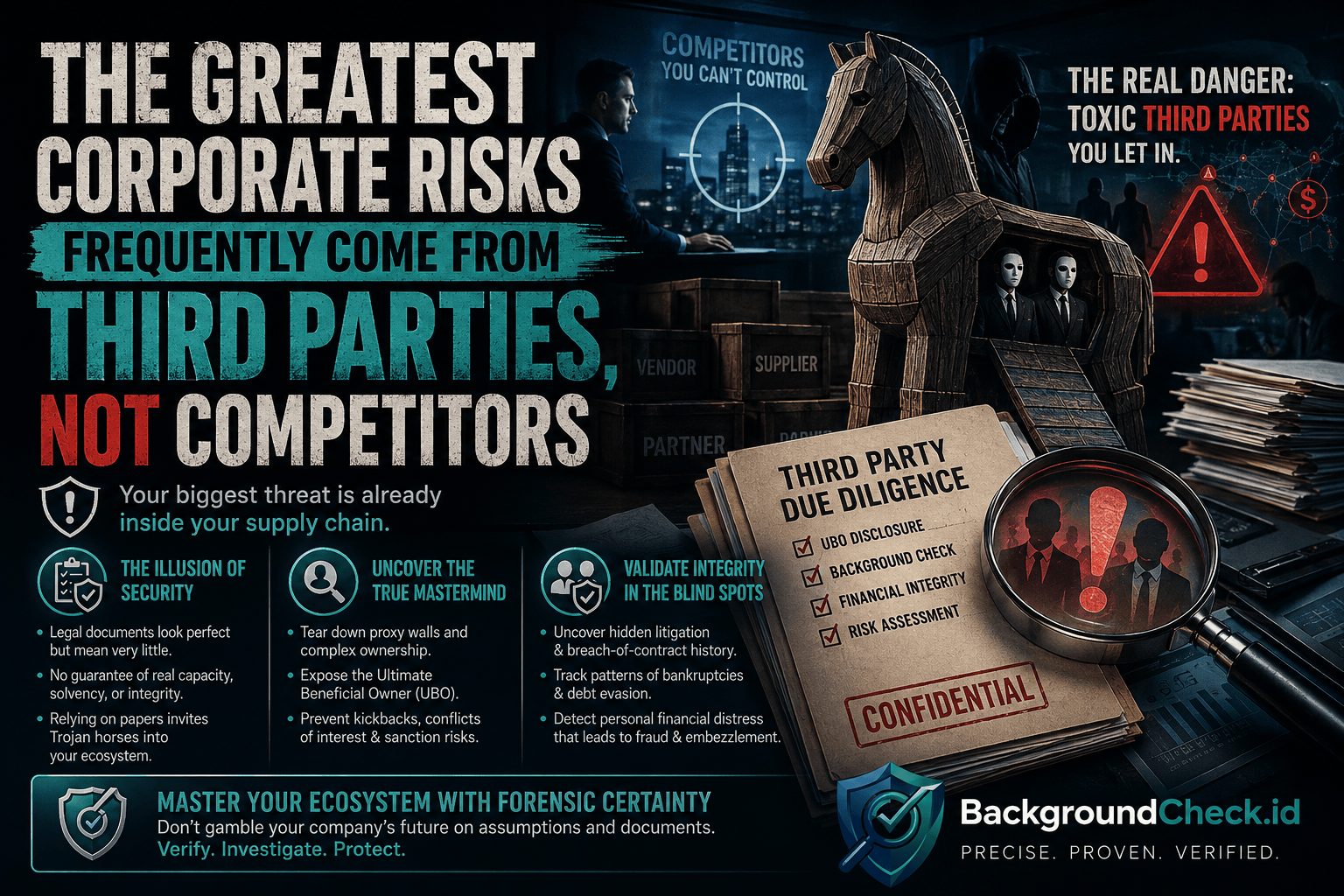
Possessing complete legal documents does not equal possessing integrity. White-collar crime syndicates, financial manipulators, and corruption networks understand this perfectly. They weaponize stacks of professionally sanitized official documents as a shield to conceal toxic liabilities. If you believe legality is a guarantee of security, you are inviting a Trojan horse directly into your corporate vault. Here is why a company that looks 100% legal can still obliterate your business.
1. The Illusion of Administrative Compliance and Shell Companies
Establishing a legally registered corporate entity requires minimal cost and time. Corporate predators routinely build dozens of shell companies possessing flawless legal documents. These documents prove that the entity is registered in the eyes of the state, but they absolutely do not prove financial solvency, actual operational capacity, or moral integrity.
A fictitious company can win a multi-million-dollar tender armed only with a legal deed and a grandiose company profile, only to blindly subcontract the work to a third party or abscond with your down payment. Legality is a minimum requirement; it is not proof of reality.
2. Hiding the Mastermind Behind Legal Proxies
When you review the board of directors listed on a corporate deed, you assume those names belong to the decision-makers. The brutal fact: in structured fraud schemes, the names listed on official documents are merely puppet directors (proxies)—perhaps a driver, an assistant, or a distant relative paid to lend their name.
At this exact juncture, legal documents lose their function, and the deep execution of
3. Legal Documents Do Not Record Executive "Skeletons in the Closet"
Companies do not engineer breach-of-contract schemes; the humans behind them do. Tax documents and business licenses will never record whether the company's CEO has a historical hobby of intentionally bankrupting business entities to evade debt.
To validate the real risk, the identities of the target's controlling board must be cross-validated through the execution of a high-tier, enterprise-scale
Pierce the Legal Shield with Forensic Intelligence
Law regulates administration, but business intelligence secures your multi-million-dollar assets. Signing a commercial contract armed solely with legal verification is equivalent to driving blindfolded through a hurricane.
Take back control of your business reality. Through a precise intelligence investigation architecture,