Under the crushing pressure of efficiency targets and operational deadlines, procurement departments are often forced to move at breakneck speed. When a new vendor offers the lowest price, accompanied by a bold company profile and seemingly legitimate incorporation deeds, the onboarding forms are signed almost immediately. "They attached their business licenses and tax IDs, everything is secure," is the commonly heard assumption.
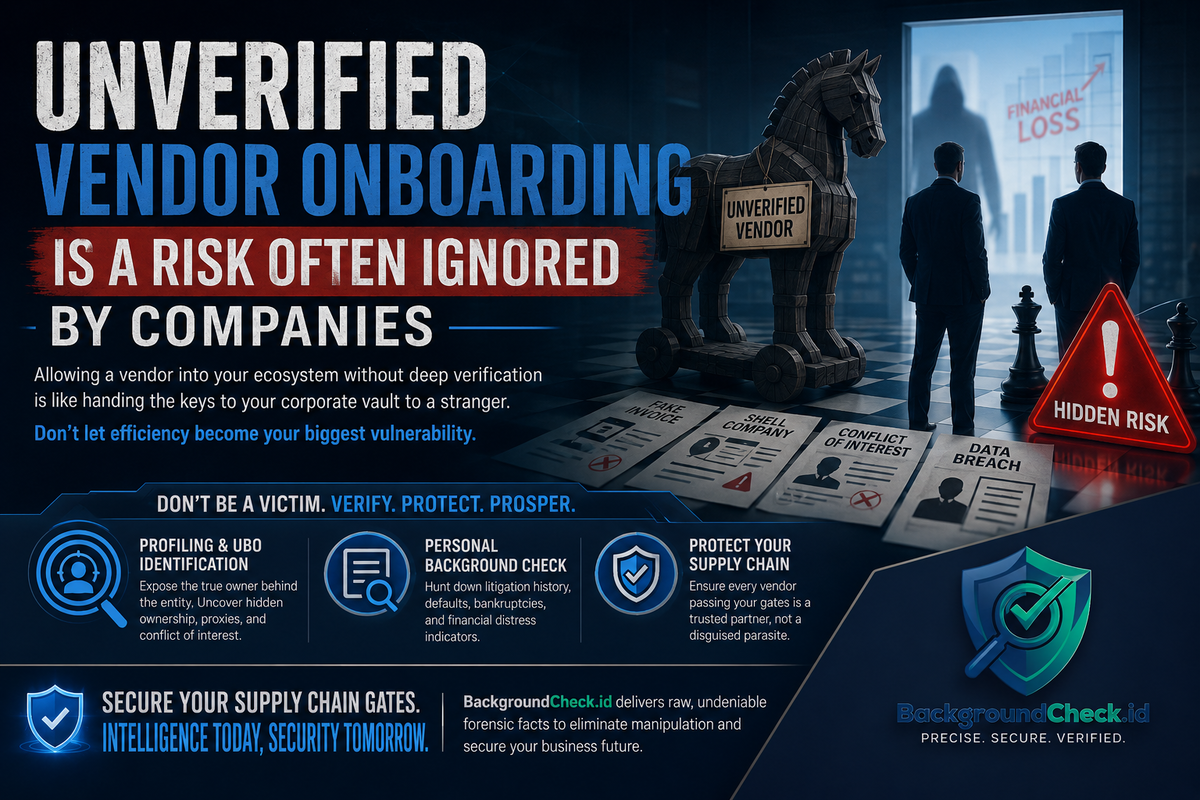
However, in the high-stakes B2B arena, this assumption is an act of lethal negligence. Allowing a vendor into your financial and operational ecosystem without conducting deep intelligence verification is exactly like handing the keys to the corporate vault to a stranger on the street. Unverified vendor onboarding is one of the most massive—and most frequently ignored—risks that triggers multi-million-dollar losses every single year.
The Illusion of Efficiency that Breeds Trojan Horses
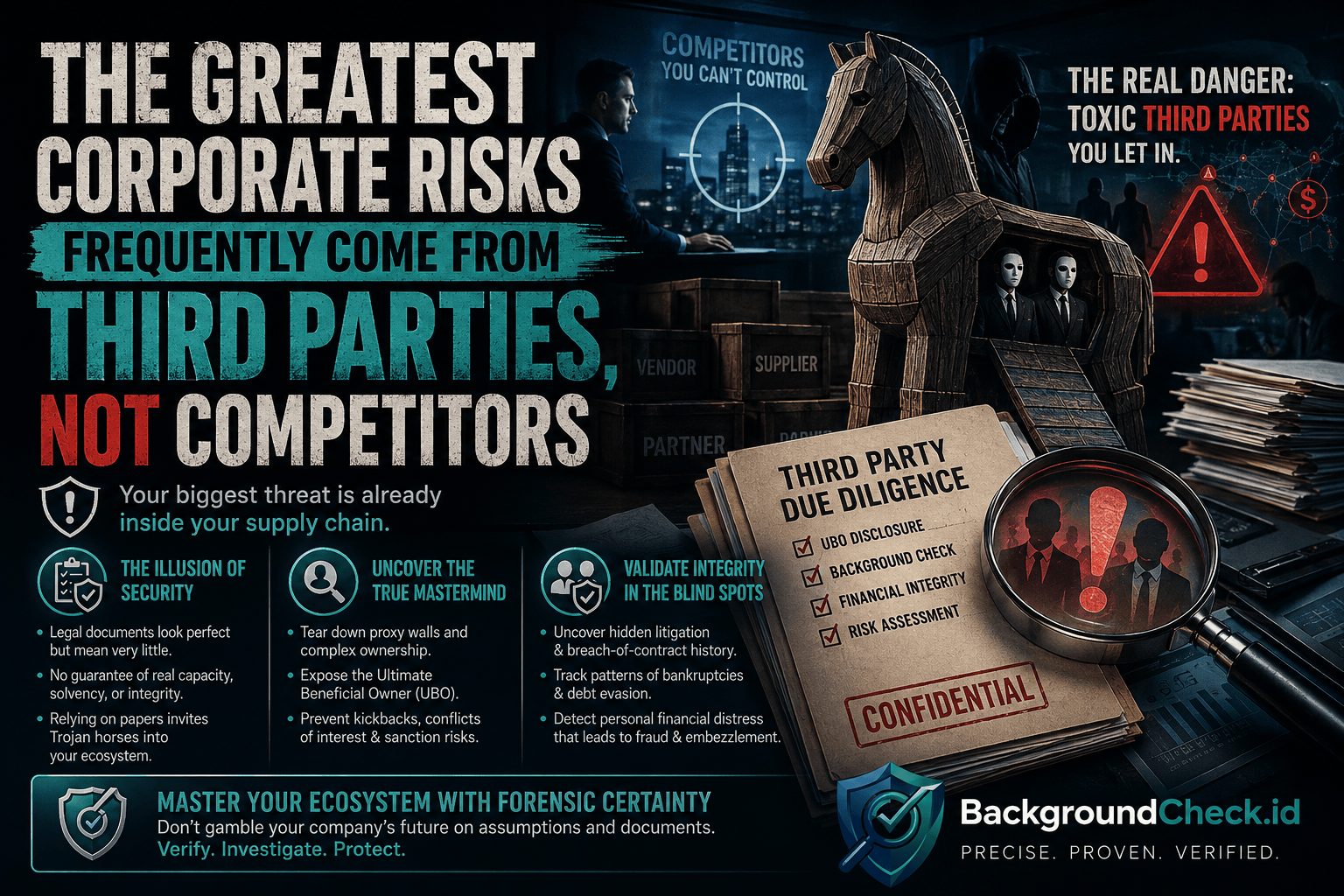
Shaving a few days off the verification process and cutting the audit budget might make your quarterly reports look efficient. However, supply chain fraud syndicates understand this weakness perfectly. They specifically establish ghost vendors or shell companies armed with flawless legal paperwork purely to bypass your standard administrative procedures.
Their goal is singular: to infiltrate your payment system as a Trojan Horse. The moment Purchase Orders (POs) start flowing, they will begin manipulating invoices, silently downgrading material quality, or even stealing internal client data.
Dismantling Dark Affiliations Behind the Vendor
To sever this risk chain at the very gates, companies can no longer rely solely on paper document checks. You must penetrate the layers of the entity itself. This is exactly where the intervention of in-depth
This intelligence investigation will expose the Ultimate Beneficial Owner (UBO) who genuinely controls the vendor. It is shockingly common to discover that a vendor winning a multi-million-dollar tender is secretly owned by your own internal manager (a massive conflict of interest), controlled by a competitor, or affiliated with a money-laundering network. Knowing the identity of the mastermind will tear down the proxy (puppet) director structures deliberately installed on the incorporation deeds.
Hunting Down Commercial Criminal Track Records
Knowing who you are dealing with is still not enough. Once the identities of the UBO and the vendor's board of directors are exposed, the next absolute line of defense is executing an enterprise-grade
Vendor fraud perpetrators almost always have a historical pattern. This maneuver will hunt down civil litigation track records, past histories of default, orchestrated bankruptcies, and indicators of personal debt pressure that they deliberately bury from public search pages. If the mastermind behind your vendor has a history of brutal commercial disputes, you are obligated to abort the onboarding process immediately.
Secure Your Supply Chain Gates
The risk of unverified vendors is not a theoretical threat; it is a silent epidemic eating away at your company's profit margins. Do not let the illusion of efficiency destroy your operational integrity.
Through a precise intelligence investigation architecture,