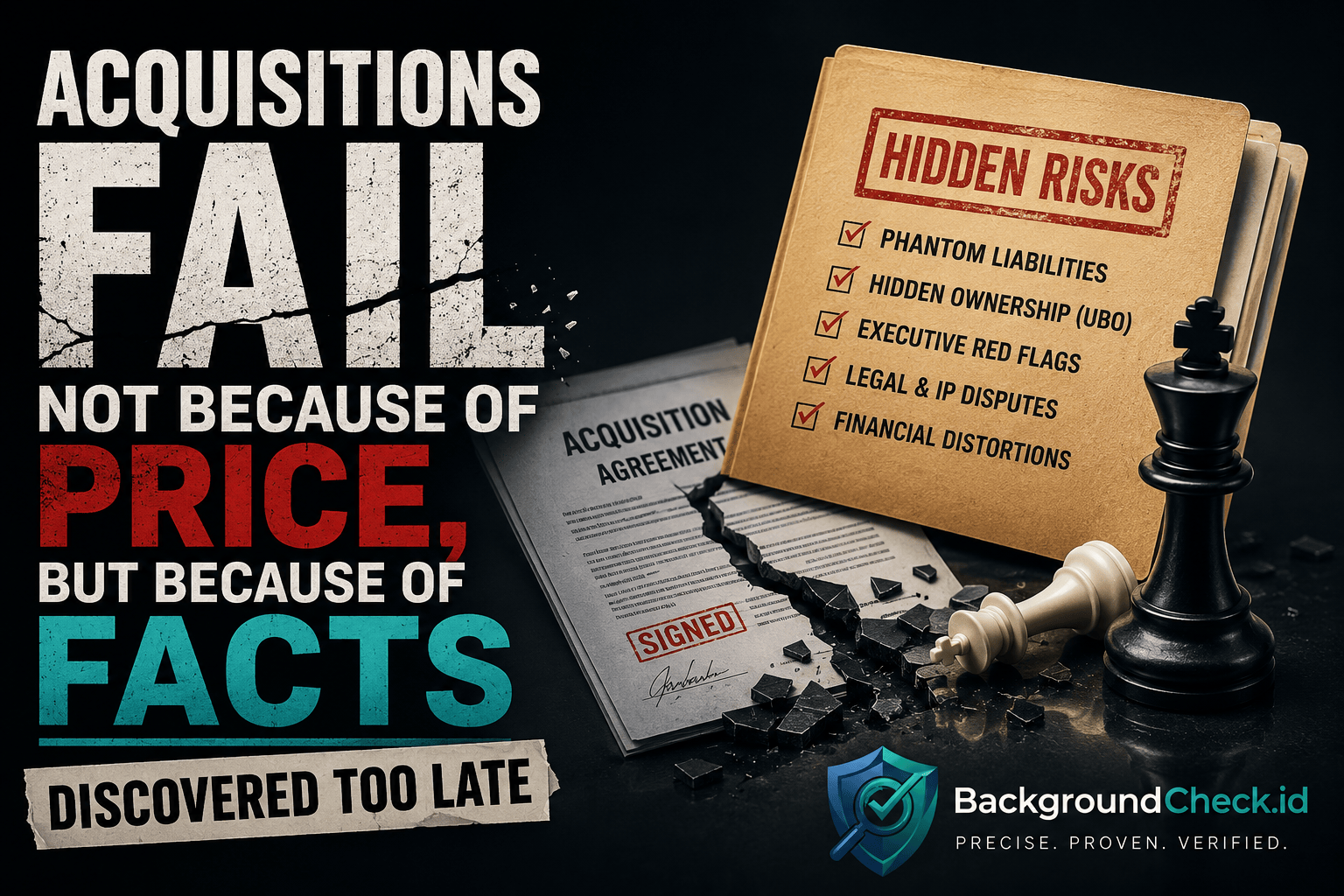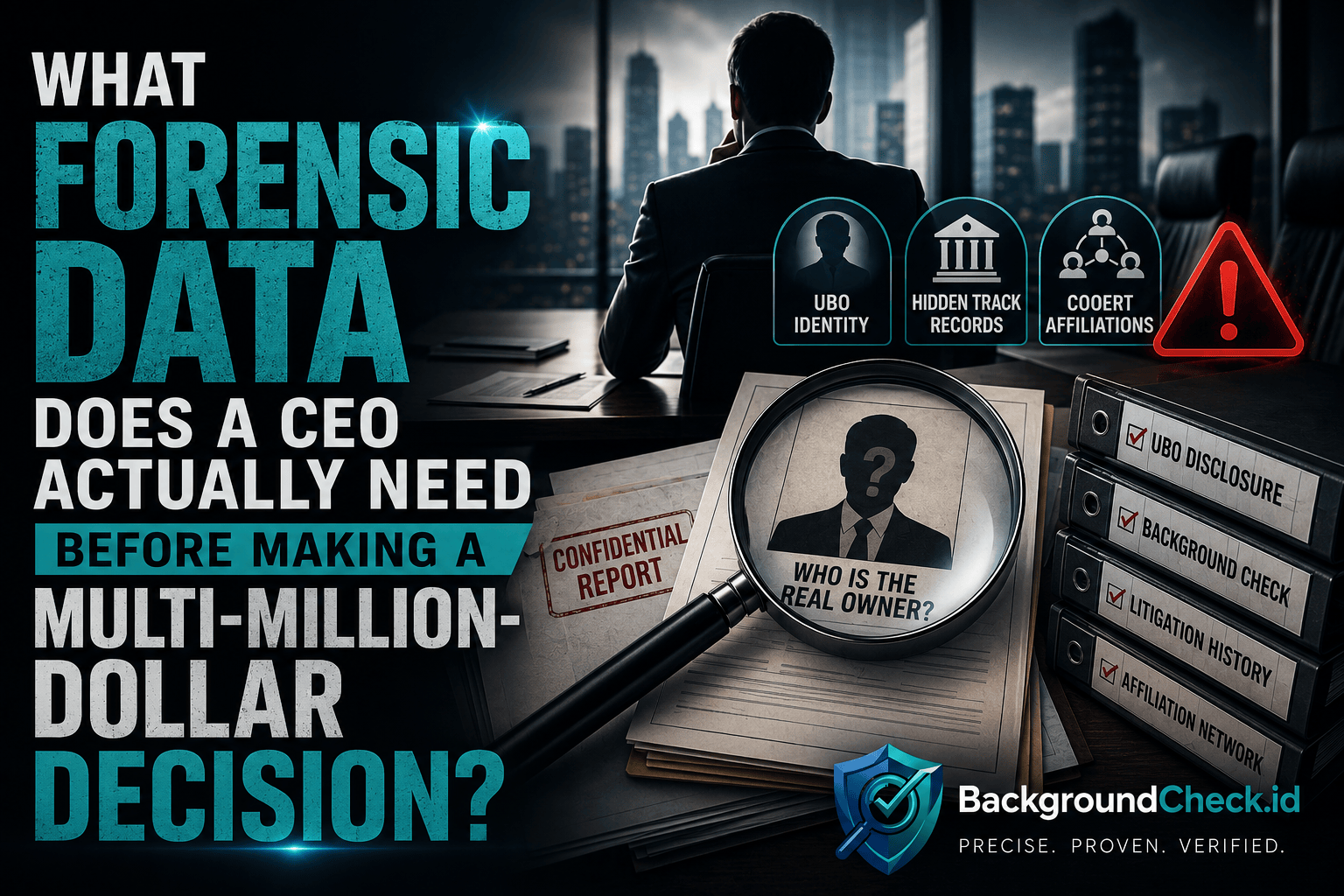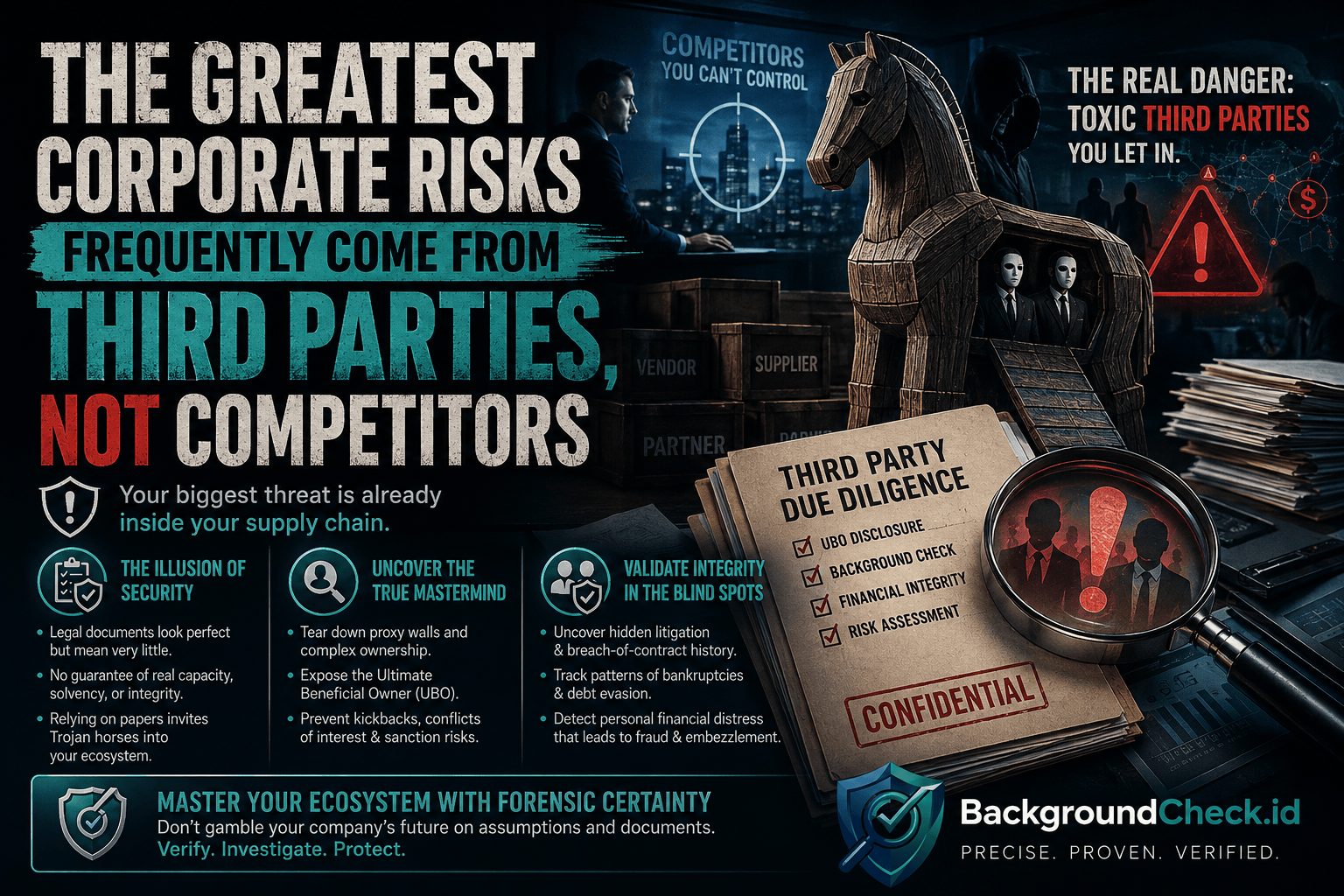
In the boardroom, regret always comes with a staggering price tag—often costing millions to billions of dollars. Every single year, we witness a parade of corporate giants plunging into lethal scandals, endless legal disputes, or massive investment losses immediately after signing an M&A deal or a strategic partnership.
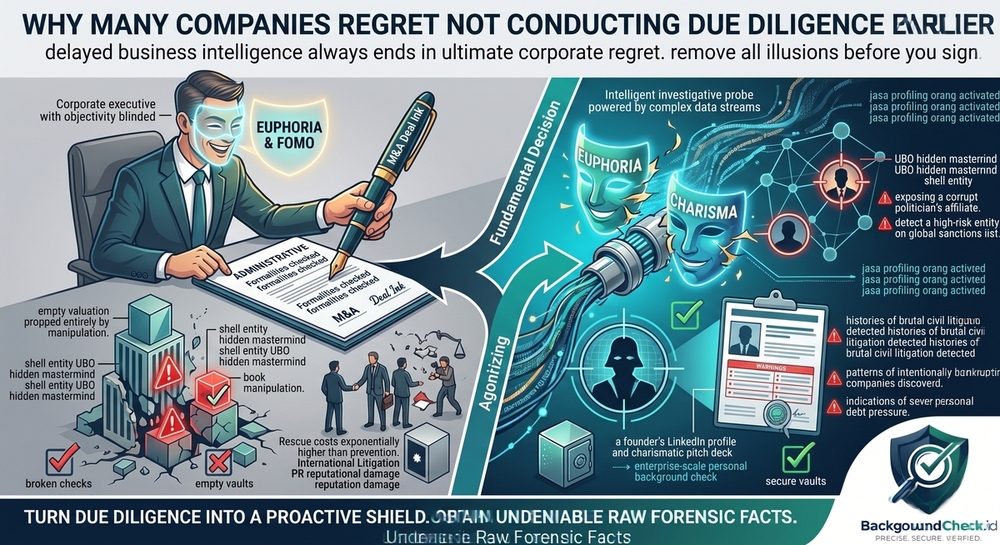
When the crisis detonates, management frequently blames "market conditions" or "unforeseen factors." However, if we dissect the anatomy of these failures, the root cause almost always points to one identical, fatal mistake: they delayed, underestimated, or completely bypassed forensic-level Due Diligence at the very beginning of the negotiations. Here is why delayed business intelligence always ends in ultimate corporate regret.
1. The Trap of Euphoria and Fear of Missing Out (FOMO)
In a hyper-competitive business climate, the intense pressure to close the deal frequently blinds objectivity. Executives are infected with FOMO; they are terrified that a lucrative acquisition target or strategic vendor will be snatched up by a competitor. For the sake of speed, they instruct their legal and finance teams to trim the due diligence process down to a mere "document-checking formality."
The brutal fact: administrative documents are incredibly easy to sanitize. Fast-tracking a deal without forensic verification is equivalent to leaping into a canyon blindfolded. Once the euphoria fades, the company realizes they have purchased an empty valuation propped up entirely by book manipulation.
2. Rescue Costs are Exponentially Higher than Prevention
Discovering that your business partner is part of a white-collar crime syndicate after the contract is signed and the funds are transferred is a living nightmare. Canceling contracts, hiring international litigation lawyers, and containing the PR reputational damage will cost dozens of times more than the initial investigation fee would have.
To prevent this trap, the deep intervention of
3. Inheriting a "Time Bomb" from Toxic Executives
Companies often regret their decisions because they only realize the board of directors of their acquisition target or JV partner consists of commercial predators precisely when an internal embezzlement scandal erupts. They inherit a "time bomb" because they evaluated those executives based solely on their LinkedIn profiles and charismatic pitch deck presentations.
This agonizing pain can be absolutely avoided if the company executes an enterprise-scale
Transform Due Diligence into a Proactive Shield
Due diligence is not a brake that slows down your business momentum; it is the high-beam headlight that ensures you do not crash into a wall at top speed. Delaying business intelligence is a strategic negligence that will penalize your balance sheet for years.
Take absolute preventive measures before the ink touches the paper. Through a precise intelligence investigation architecture,