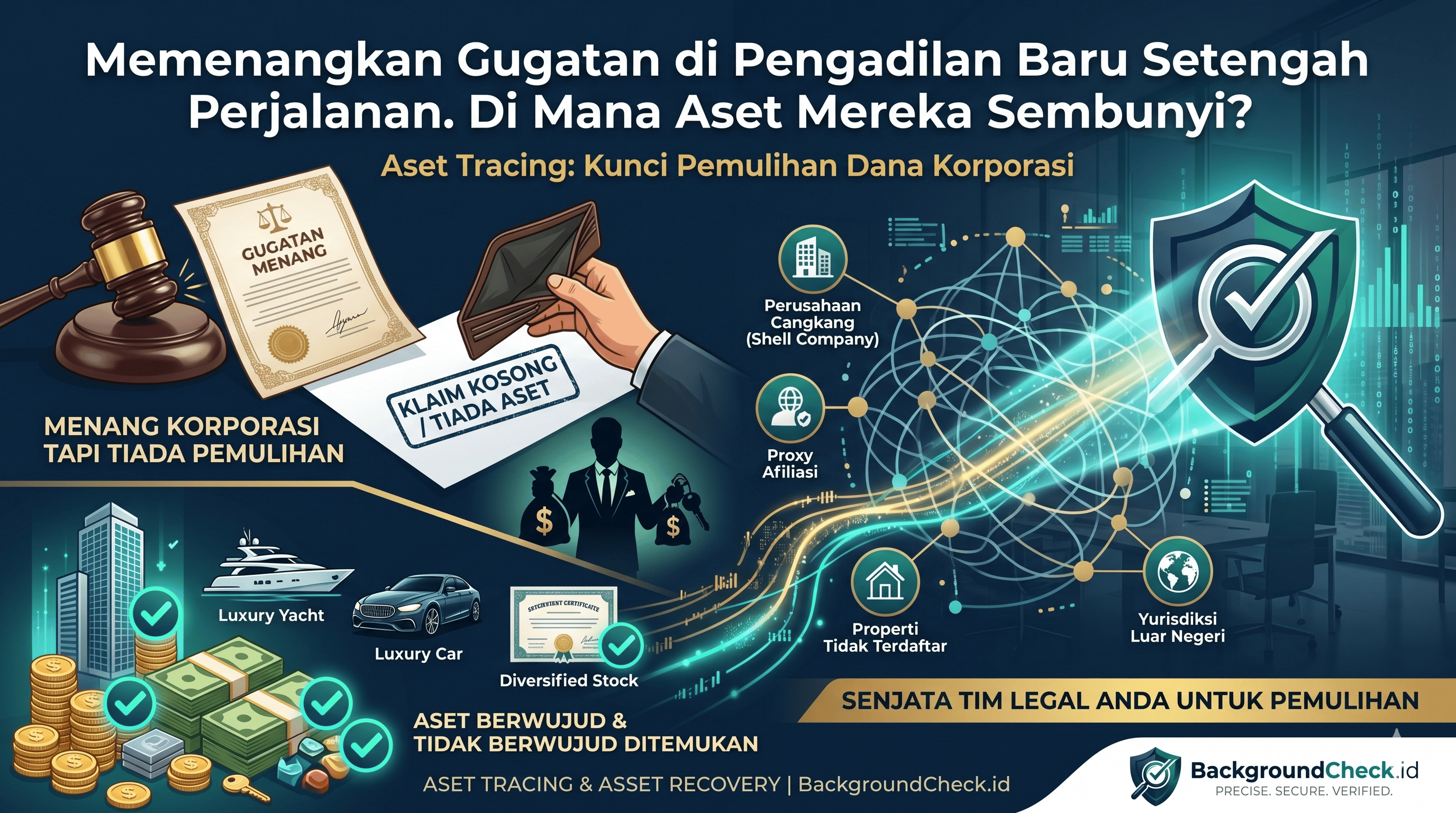
There is no more painful irony for a corporate legal team than winning a multimillion-rupiah civil lawsuit, only to end up with nothing but a piece of paper. In the courtroom, the debtor confidently claims that their company has gone totally bankrupt and all their bank accounts have been drained. However, outside the court, you can still see them driving luxury cars or secretly funding the operations of new business entities.
Corporate crooks and cunning debtors are no amateurs. They are master architects in manipulating regulations and erasing money trails. At this dead end, asset tracing services transform from a simple search tool to a game-changing weapon.
Unraveling the Wealth Concealment Labyrinth
Embezzled money or massive debts are rarely left untouched in the main account under the perpetrator's name. These assets are always laundered through a series of complex forensic transaction maneuvers: hidden behind shell companies, transferred under family members' names, converted into unregistered properties, or smuggled into offshore jurisdictions.
Advanced asset tracing methods are tasked with unraveling this tangled web. By combining financial intelligence, forensic audits, and corporate legal analysis, this process tracks the flow of funds from the starting point to the final hiding place. Of course, since assets are often entrusted to the perpetrator's inner circle, this tracking maneuver must be integrated with sharp person profiling services.
Furthermore, conducting a comprehensive personal background check on the debtor will map out and expose any proxies, "puppets", or dark affiliates used as shields to protect their assets.
The Ultimate Execution Weapon for Your Legal Team
Going to court without knowing the exact location of the debtor's assets is like shooting in the dark. For your management and legal team, securing an asset tracing intelligence report from BackgroundCheck.id is a crucial strategic step before the execution hammer is struck. We help you identify both tangible and intangible assets that are systematically obscured, ensuring that the financial loss recovery (asset recovery) process you undertake ends with real restitution, not just a dead end on paper.